
Charlotte Henry and Andrew Orr join host Kelly Guimont to discuss ad blocking in Safari and the latest report of plaintext password storage.

WWDC 2019 Media Invites Arrive, Featuring Unicorns
With just 12 days to go until WWDC 2019, media invites to the keynote have started to arrive. Rather pleasingly, this year they involve an Animoji unicorn, AppleIsider reported. WWDC 2019 will take place between June 3 and 7 in San Jose.
Invitations to the media started to arrive on Wednesday, 12 days before the start of the conference. The invitation specifically advises the person is “invited to the keynote address at our annual Worldwide Developers Conference.” The media invites follow a similar design as those who applied for the ticket lottery in March, featuring an Animoji head with items exploding out from above, drawn in a neon light style. Whereas previous header images featured the robot, skull, alien, and monkey, the latest version uses the unicorn, again with the item-explosion motif.

G Suite Passwords Stored in Plaintext Since 2005
Google has stored passwords to some G Suite enterprise accounts in plaintext, since 2005, the company has admitted.
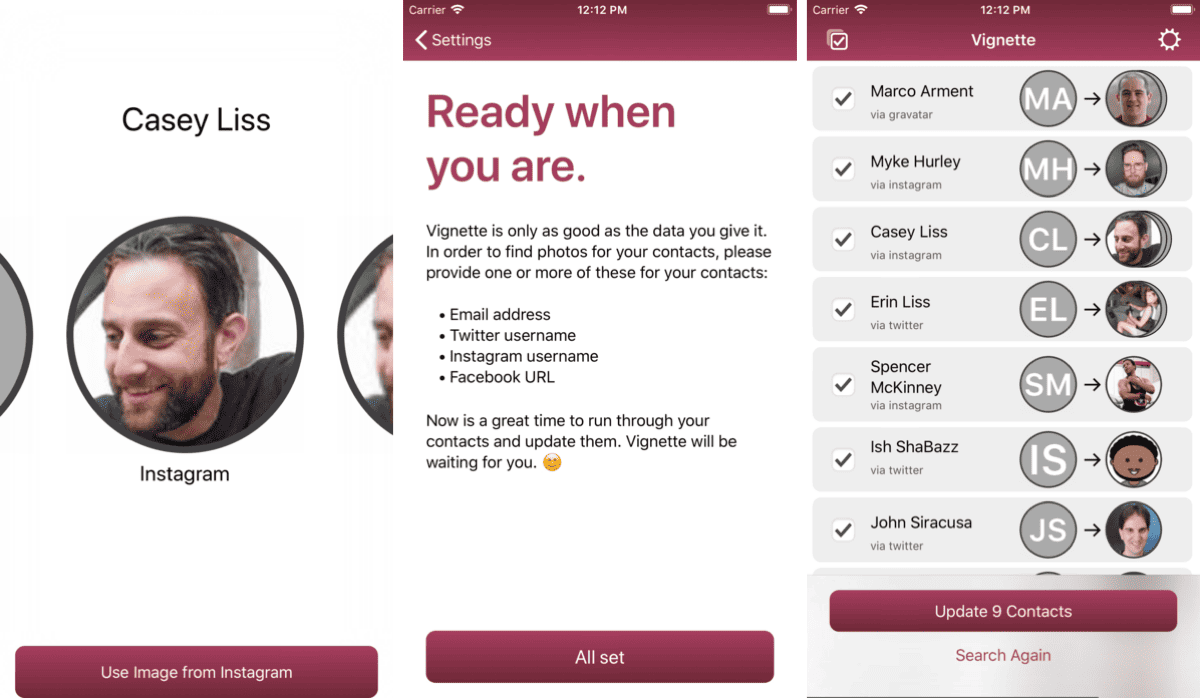
Vignette App Lets You Update Your Contact Photos Privately
Vignette app allows you to change all those ugly grey circles with initials into actual photographs. By searching Twitter, Facebook, Instagram, and Gravatar—no login required—Vignette will attempt to pair your contacts with their profile pictures on social media. After amassing all these images, using Vignette’s easy to use interface, you can select which avatar you’d like to use, or none at all. Once you’re all set, Vignette will write those updates to your contacts database on your phone. That means in Messages, Phone, and all of your other apps, you see beautiful images instead of ugly initials. Vignette is free to try, but in order to save the updates to your contact list, you will need to buy the one-time in-app purchase. Vignette app runs entirely on your phone; your contacts stay on your device and are never transmitted *anywhere*. Privacy is a critical factor to Vignette; your trust is important and will not be squandered. App Store: Free (Offers In-App Purchases)

Cannes Lions Names Apple 2019 Creative Marketer of the Year
Apple has been awarded the 2019 Creative Marketer of the Year by Cannes Lions, the world’s largest festival for advertising and creative communications.

Portland Transit Riders Can Add Hop Fastpass to Wallet
Portland transit riders can now add the Hop Fastpass to Apple Wallet, which works with TriMet, C-Tran, and Portland Streetcar.

UN Report Says Making Siri Voice Female by Default is Sexist
A report from the United Nations says that making virtual assistants like Siri have female voices by default is sexist.
As voice-powered technology reaches into communities that do not currently subscribe to Western gender stereotypes, including indigenous communities, the feminization of digital assistants may help gender biases to take hold and spread. Because Alexa, Cortana, Google Home and Siri are all female exclusively or female by default in most markets, women assume the role of digital attendant…
I think it’s a fair point.
Apple’s Privacy Preserving Ad Click Attribution in Safari
In a WebKit post today, Apple has an idea to make online ads private. It’s called Privacy Preserving Ad Click Attribution.

EE Unveils UK 5G Launch And Harry Potter Partnership
Mobile network EE announced the launch of its 5G service – it will exclusively offer Harry Potter: Wizards United, but not Huawei devices.

Apple AR Hiring Increases to 33 Positions Since Last Year
Last May Apple had one AR job position open. It gradually increased to five by the end of 2018. Now, Apple AR hiring has increased to 33 open positions.
The hiring upswing is a clear sign that the Cupertino tech giant is looking to make AR a major part of its mobile iOS devices moving forward…Of the current 33 openings, the extreme majority — 30 — are located at Apple’s Cupertino headquarters.