
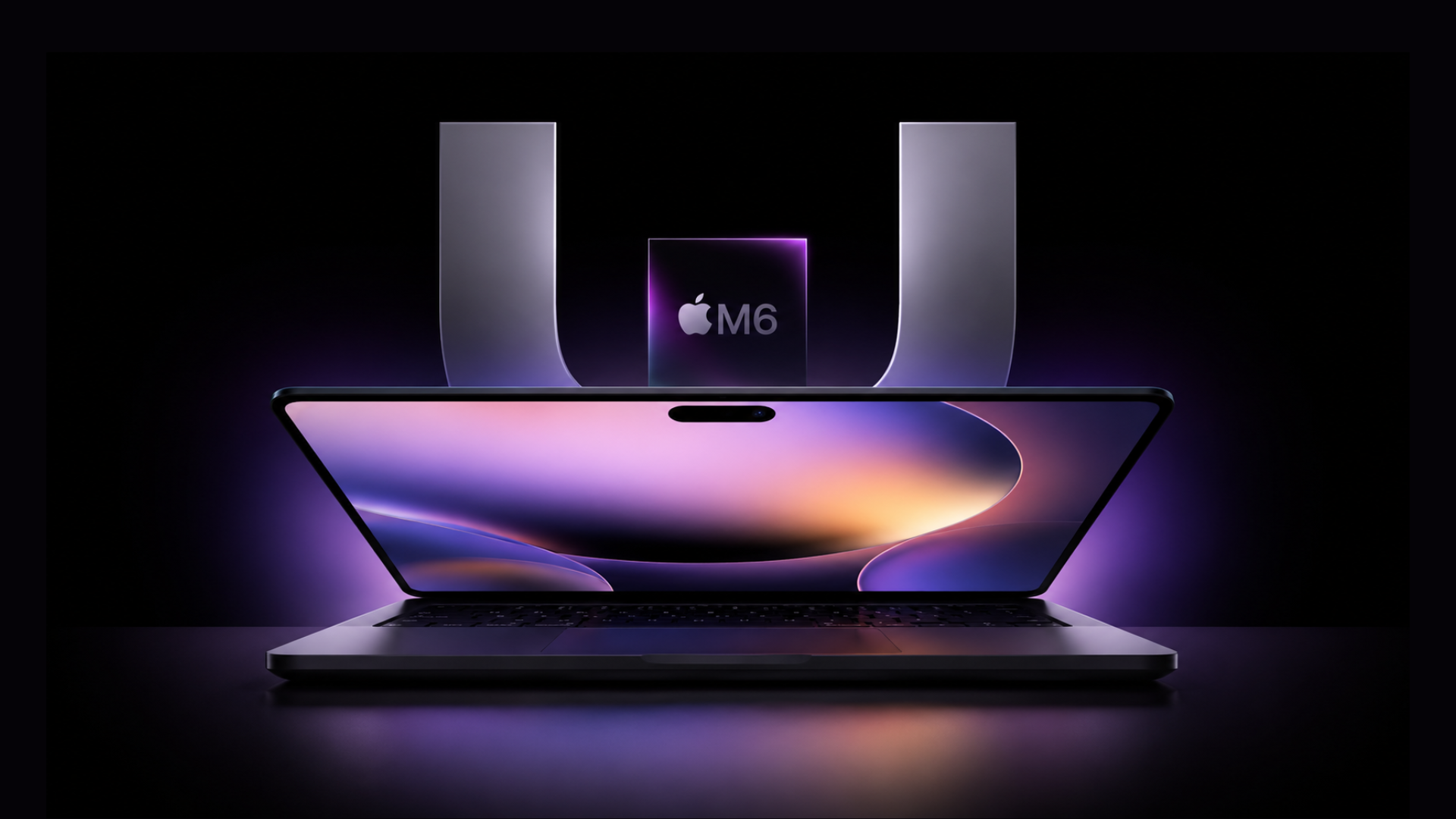
Apple’s next high-end MacBook reportedly won’t just be another MacBook Pro refresh. Multiple reports now suggest Apple is preparing a major redesign with OLED, touch support, a thinner chassis, and new M6 chips, and some rumors even point to a new branding strategy called MacBook Ultra.
The timing also lines up with Apple’s recent push toward more premium “Ultra” products, including the Apple Watch Ultra and CarPlay Ultra. If Apple uses the Ultra branding for its next flagship laptop, the company will need more than a yearly spec bump to justify it. Based on current leaks and supply chain reports, Apple appears to be planning exactly that.
1. OLED display finally comes to the MacBook
The biggest expected upgrade is the move from mini-LED to OLED.
Don’t miss the best of The Mac Observer
Set us as a preferred source and our Apple reporting ranks higher in your Google Search results and Discover feed — one tap, no account changes.
Current MacBook Pro models already offer excellent displays, but OLED changes several things at once. Reports say Apple plans to use tandem OLED technology, similar to the latest iPad Pro lineup. That means deeper blacks, stronger contrast, improved HDR brightness, and better power efficiency.
Samsung Display reportedly crossed the 90% production yield mark for these laptop-sized OLED panels, which is a major manufacturing milestone and one reason analysts now expect production to ramp up soon.
What makes this interesting is that Apple has stayed with LCD and mini-LED on Macs long after moving OLED to iPhones and iPads. This upgrade finally brings the MacBook lineup closer to Apple’s best display hardware.
Users who edit photos, grade HDR video, or work in dark environments will likely notice the difference immediately because OLED handles black levels and blooming far better than mini-LED.
2. Apple is reportedly bringing touch support to macOS

One of the longest-running Apple debates could finally end with this machine.
Reports from Bloomberg and analyst Ming-Chi Kuo suggest Apple is actively developing a touchscreen MacBook with on-cell touch technology integrated into the OLED panel.
Apple publicly resisted touchscreen Macs for years, arguing that traditional desktop workflows work better with a keyboard and trackpad. But user behavior changed. Many people now move between iPads, phones, and laptops all day, and touch interaction feels normal to younger users.
The interesting part is how Apple reportedly plans to handle this transition.
Leaks suggest Apple does not want macOS to become iPadOS. Instead, the company plans to let users switch naturally between touch, trackpad, and mouse input. Interface elements reportedly adjust depending on how users interact with the display.
For example, tapping menu items could expand larger touch-friendly controls automatically. That sounds much more practical than simply placing a touch layer on top of today’s macOS interface.
If Apple gets this right, the MacBook Ultra would feel very different from current MacBooks without turning into a giant iPad.
3. A thinner design without sacrificing ports
Reports also point to a dramatically thinner chassis. This creates an interesting challenge for Apple because the company reversed course in 2021 and brought back HDMI, MagSafe, and SD card slots after years of criticism from professional users.
Now Apple reportedly wants thinner MacBooks again, while keeping those ports.
That balancing act matters because many professional users still remember the older Intel-era MacBook Pro models that sacrificed practicality for thinness. Apple eventually admitted those machines pushed design compromises too far.
This redesign looks different because OLED panels naturally reduce display thickness by removing the bulky backlight system used in LCDs. Apple gains internal space without necessarily removing features.
If Apple delivers a thinner MacBook that still keeps MagSafe, HDMI, Thunderbolt ports, and strong battery life, the Ultra branding starts making more sense.
4. Dynamic Island-style display cutout
Apple introduced the notch on MacBook Pro models in 2021, and users have complained about it ever since because it interrupts the menu bar area. Reports now suggest Apple could replace the notch with a Dynamic Island-style cutout similar to newer iPhones.
The interesting part is that this reportedly goes beyond visual changes.
Leaks suggest Apple wants the Mac version of Dynamic Island to become interactive and context-aware, expanding based on apps, background tasks, or system controls.
That could make multitasking more useful on macOS, especially for media playback, microphone activity, AirPods controls, exports, and live workflows running in the background.
Apple already trained users to interact with Dynamic Island on the iPhone 14 Pro and newer iPhones. Bringing similar functionality to the Mac would create more consistency across Apple devices.
5. M6 chips built around AI performance

The redesigned machine is also expected to launch with M6 Pro and M6 Max chips based on TSMC’s 2nm architecture.
That matters for two reasons.
- Smaller process nodes improve power efficiency and thermal performance. Apple can push higher performance without increasing heat or battery drain.
- Apple is entering a period where every major hardware launch centers around AI workloads.
Reports suggest the M6 architecture will tightly integrate CPU, GPU, DRAM, and Neural Engine components to improve machine learning performance and on-device AI tasks.
That directly connects with Apple’s broader push into Apple Intelligence features across macOS and iOS.
Professional users working with local AI models, video generation tools, image processing, coding assistants, and creative workflows will likely become Apple’s main target audience for these chips.
“Ultra” name actually makes sense
Right now, the MacBook Pro already sits at the top of Apple’s laptop lineup. So if Apple introduces a MacBook Ultra, it needs clear separation from the existing Pro models.
These rumored upgrades create that separation.
An OLED display, touch support, thinner hardware, Dynamic Island integration, and a completely new chip architecture together feel closer to a platform reset than a normal MacBook refresh.
That also explains why reports suggest Apple may continue selling existing M5 Pro and M5 Max MacBook Pro models alongside this new machine instead of replacing them immediately.
The bigger concern now is pricing.
OLED laptop panels remain expensive to manufacture, especially at Apple’s quality standards. Add touchscreen hardware, a redesigned chassis, and next-generation silicon, and the MacBook Ultra will likely become Apple’s most expensive laptop yet.
The current supply chain situation also creates uncertainty. Several reports say global memory shortages could delay launch plans into early 2027 instead of late 2026.
Still, the direction is becoming clear. Apple appears ready to turn the MacBook Pro into something much more ambitious than another yearly chip update.



Discussion