
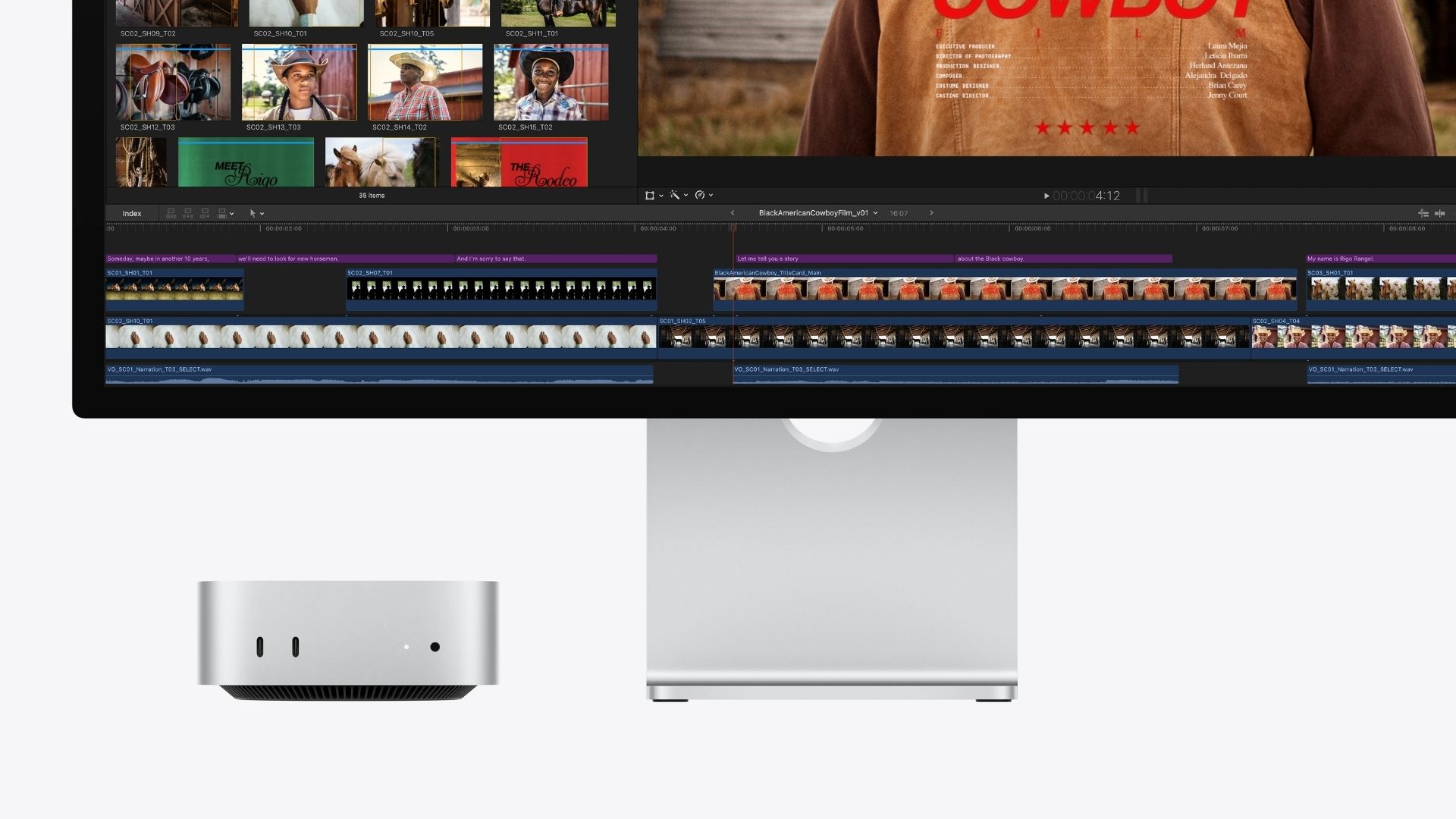
Usually, Apple waits until late autumn to announce its new desktop computers. But this year, the company broke its own routine. Massive demand from business customers wanting to run artificial intelligence models pushed the tech giant to release the new Mac Mini and Mac Studio much earlier than expected. This sudden enterprise push caught its internal teams completely off guard just weeks ahead of the busy fall hardware season.
Business demand for AI hardware changes the release timeline
According to a recent report from The Information, the early launch of these new desktop machines happened because businesses are buying up hardware to run large AI models. During a special event in June, the company showed off how multiple Mac Studio computers could be linked together to handle heavy workloads.
Even though it promoted this feature, the sudden rush of business buyers took the company by surprise. Reports indicate there was no dedicated engineering team for business customers, and it lacked a clear enterprise strategy. Some businesses even asked to buy access to the company’s Private Cloud Compute setup but were turned down, forcing them to use third-party partners instead.
Don’t miss the best of The Mac Observer
Set us as a preferred source and our Apple reporting ranks higher in your Google Search results and Discover feed — one tap, no account changes.
Global memory shortages leave desktop models out of stock
This sudden surge in hardware sales comes at a difficult time for the supply chain. A global memory shortage has made it hard to keep these computers in stock. Many configurations of both desktop models are currently backordered and have been out of stock for months.
Because these powerful desktop systems are so hard to find, some business customers are looking elsewhere. Competitors are seeing increased interest in their compact AI desktops, which share a similar footprint to the smaller Apple desktop, as buyers search for available hardware.
To retain this new wave of business customers, the company has to address its supply chain problems. Building powerful computers is a good start, but it needs to create a real support strategy and keep its shelves stocked before these buyers permanently switch to other platforms.


Discussion