Facebook Claims it can Protect Elections But Lets Politicians Lie

Facebook announced new features today that it claims can stop 2020 election interference. However, its advertising policy lets politicians lie and gladly pockets the money it gets from allowing it.

One new feature is called Facebook Protect. By hijacking accounts of political candidates or their campaign staff, bad actors can steal sensitive information, expose secrets, and spread disinformation. So to safeguard these vulnerable users, Facebook is launching a new program with extra security they can opt into.

Mark Zuckerberg on letting politicians lie in Facebook ads: “I don’t think people want to live in a world where you can only say things that tech companies decide are 100 percent true. And I think that those tensions are something we have to live with.”

Trend Micro Apps Caught Harvesting User Browser History

Several Trend Micro apps were removed from the Mac App Store after they were found collecting user browser history.

Dr Cleaner, Dr Antivirus, and App Uninstall – utilities owned by the Japan-headquartered security house and distributed on the Mac App Store – are no longer available for download…Mac security guru Patrick Wardle noted last week that in addition to the advertised functions of removing adware and malware from Macs, the software also collected people’s personal data including their browsing history, then transmitted that data as a password-protected archive to a server on the internet.

As of this writing Dr. Antivirus is still in the MAS.

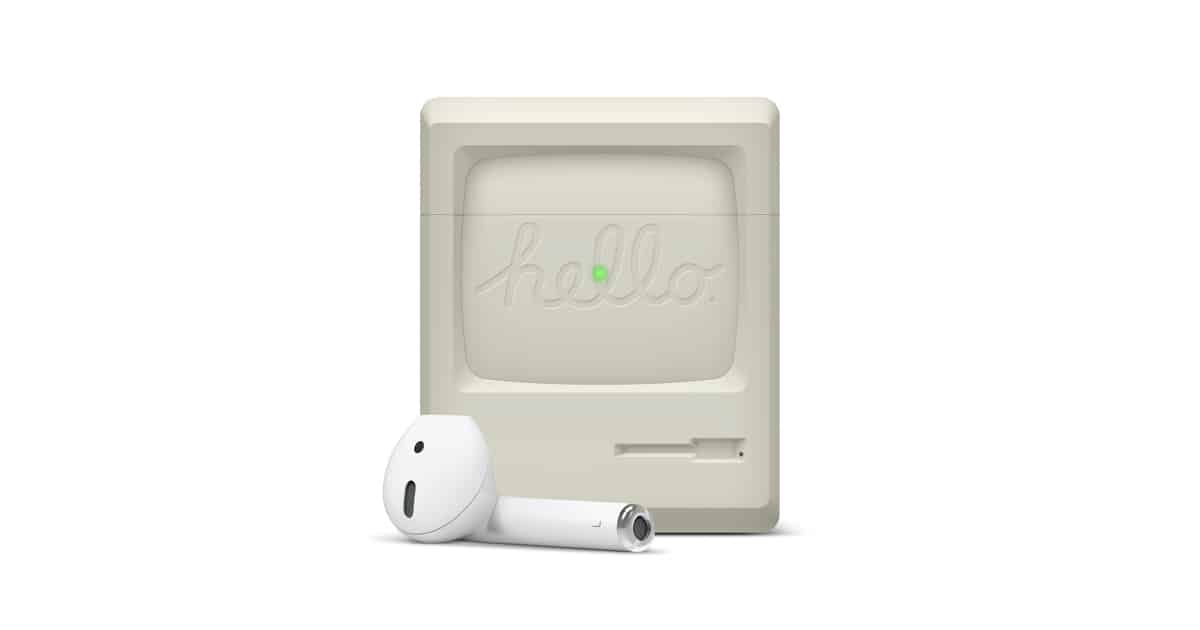
AirPod Case Styled Like a Classic Mac

Elago has a rather stylish looking AirPods case that is designed like a classic Apple monitor. It has an anti-slip coating and is made of flexible, impact-resistant silicone material. The case is compatible with Apple AirPods 1 and 2 and supports wireless charging of the Airpods Wireless Charging Case. It costs $13.99

2020 Will be a Big Year for Apple, and AR

It is fairly common that Apple is not the first mover with a technology, but it then subsequently takes that technology into the mainstream. Mark Gurman at Bloomberg Businessweek thinks that with Apple set to release its smart glasses, that could be the cases with AR. It is looking like 2020 could prove to be a very big year for the company indeed.

The coming year will be critical for Apple Inc. Consumers should expect its most impressive hardware rollout in some time: The iPhone is due for its first major update since 2017, including 5G support, a much beefier processor, and a rear-facing 3D camera. The latter will give the phone a better sense of where it is in physical space, improving the accuracy of object placement in augmented-reality apps, which overlay virtual images on the real world. That could make it easier for users to model, say, the placement of pictures on their walls.

Should You Warn Your Guests About Smart Devices?

David Murphy asks if people are morally obligated to inform their guests that their home contains smart devices like HomePod, Amazon Alexa, and Google Home. Given the fact that these devices can listen to you, should you post a sign in your house that says, “Warning: This Area Under Surveillance?”

If you’re simply sporting a smart speaker, I think announcing its presence is less of a deal—overkill, really. But if a camera is recording me at any point, and that’s something you can view later, I think it’s the friendly thing to do to let me know before I start gossiping…or worse.

What do you mean by worse??