Andrew Orr's photo

Andrew Orr

Since 2015 Andrew has been writing about Apple, privacy, security, and at one point even Android. You can find him most places online under the username @andrewornot.

Get In Touch:

The ‘Cult’ of Apple, Ranking No. 6 on an Evil List

Writing for Slate, Cory Doctorow criticizes Apple, calling its customers a cult and Apple a monopoly. I don’t plan to pick apart his article and defend Apple, but I do particularly disagree with this quote:

When it comes to Apple, even if you’re paying for the product, you’re still the product: sold to app programmers as a captive market, or gouged on parts and service by official Apple depots.

I guess consumers can’t do anything right. Not only are we a cult, but we don’t even have the power of the free market, instead we’re “sold” to developers.


Scotland Police to Use ‘Cyber Kiosks’ to Extract Smartphone Data

Starting January 20, 2020 Scotland police will use devices called cyber kiosks to analyze the contents of smartphones during investigations.

Police Scotland will only examine a digital device where there is a legal basis and where it is necessary, justified and proportionate to the incident or crime under investigation.

Cyber kiosks used by Police Scotland will not be enabled to store data from digital devices.  Once an examination is complete, all device data is securely deleted from the cyber kiosk.

Google’s iPhone Security App Keeps You in its Ecosystem

Google updated its Smart Lock app on iOS to let iPhones be used for two-factor authentication. But it will only work inside Chrome. Now your only choices for Google two-factor authentication are this Smart Lock app, or a phone number (an insecure method). You can also use a physical security key but not an app like Authy.

After installing the update, users are asked to select a Google account to set up their phone’s built-in security key. According to a Google cryptographer, the feature makes use of Apple’s Secure Enclave hardware, which securely stores ‌Touch ID‌, Face ID, and other cryptographic data on iOS devices.

Update. So I made a mistake and you can use an app like Authy, but you first have to surrender your phone number to Google. Which I’m obviously loathe to do so I use a disposable number.

Cellebrite’s Acquisition Adds Computer Forensics to its Portfolio

Cellebrite, a company specializing in hacking smartphones for law enforcement, has acquired BlackBag Technologies, a company specializing in hacking computers for law enforcement. This will let Cellebrite offer law enforcement an “all-in-one” forensic solution to cover smartphones, laptops, desktops, and cloud data.

It also means offering a broad array of field acquisition capabilities including consent-based evidence collection along with an integrated solution set that provides access, insight and evidence management to facilitate and control large-scale deployments and orchestrate the entire digital intelligence operation.

Cellebrite offers all of these capabilities to law enforcement, but the FBI still wants Apple to create a backdoored version of iOS.

How to Avoid Online Scams With This Guide

Emily Long put together a guide on how to avoid online scams, like not clicking links in emails, not sharing passwords, and more.

The basic rule for surviving internet scams is simple: If it sounds too good to be true, it probably is. A little common sense goes a long way to realizing that you aren’t going to suddenly win the Spanish National Lottery when you didn’t even know you had a ticket.

A useful guide.

Build an Apple I Replica With This $99 SmartyKit

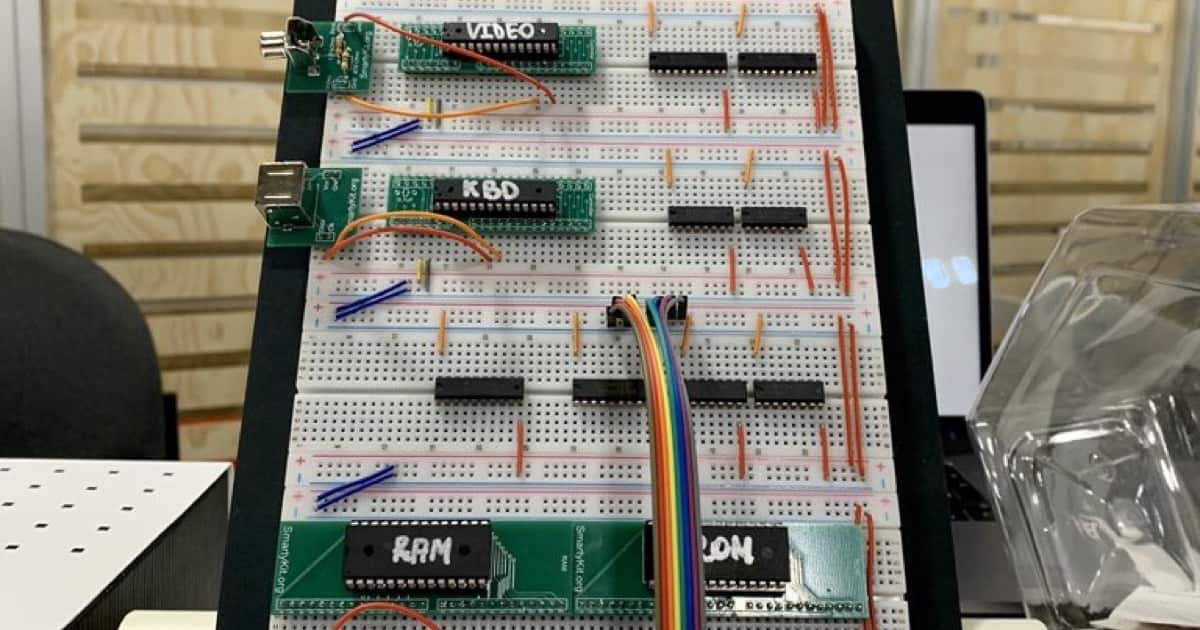
Steve Wozniak built the Apple I computer by hand, and it sold at US$666.66 when it went on sale July 1976. And with a product called SmartyKit you can build a replica of it.

Besides a cool DIY project, the company behind SmartyKit also proposes it as an educational tool for those interested in knowing what are the main parts of every computer, what a processor is and how it works, how a video signal is formed and how a simple operating system works.

14 Years Ago Steve Jobs Introduced the First MacBook Pro

14 years ago today Steve Jobs unveiled the first MacBook Pro at Macworld 2006. Most of the keynote is focused on other products, like Aperture, iLife, iMove, iWeb, iWork, and more. The MacBook Pro’s introduction came as a “one last thing” announcement. In this segment, he discusses the performance per watt of various Apple microprocessors like the PowerPC G4 and PowerPC G5. But Intel’s Core Duo processor was better at energy efficiency, and that’s what the MacBook Pro used.

FCC Urged to Do Something About SIM Swapping

Lawmakers are urging the FCC to do something about SIM swapping attacks, which have been responsible for the theft of tens of millions.

SIM swapping is an insidious form of mobile phone fraud that is often used to steal large amounts of cryptocurrencies and other items of value from victims. All too frequently, the scam involves bribing or tricking employees at mobile phone stores into seizing control of the target’s phone number and diverting all texts and phone calls to the attacker’s mobile device.