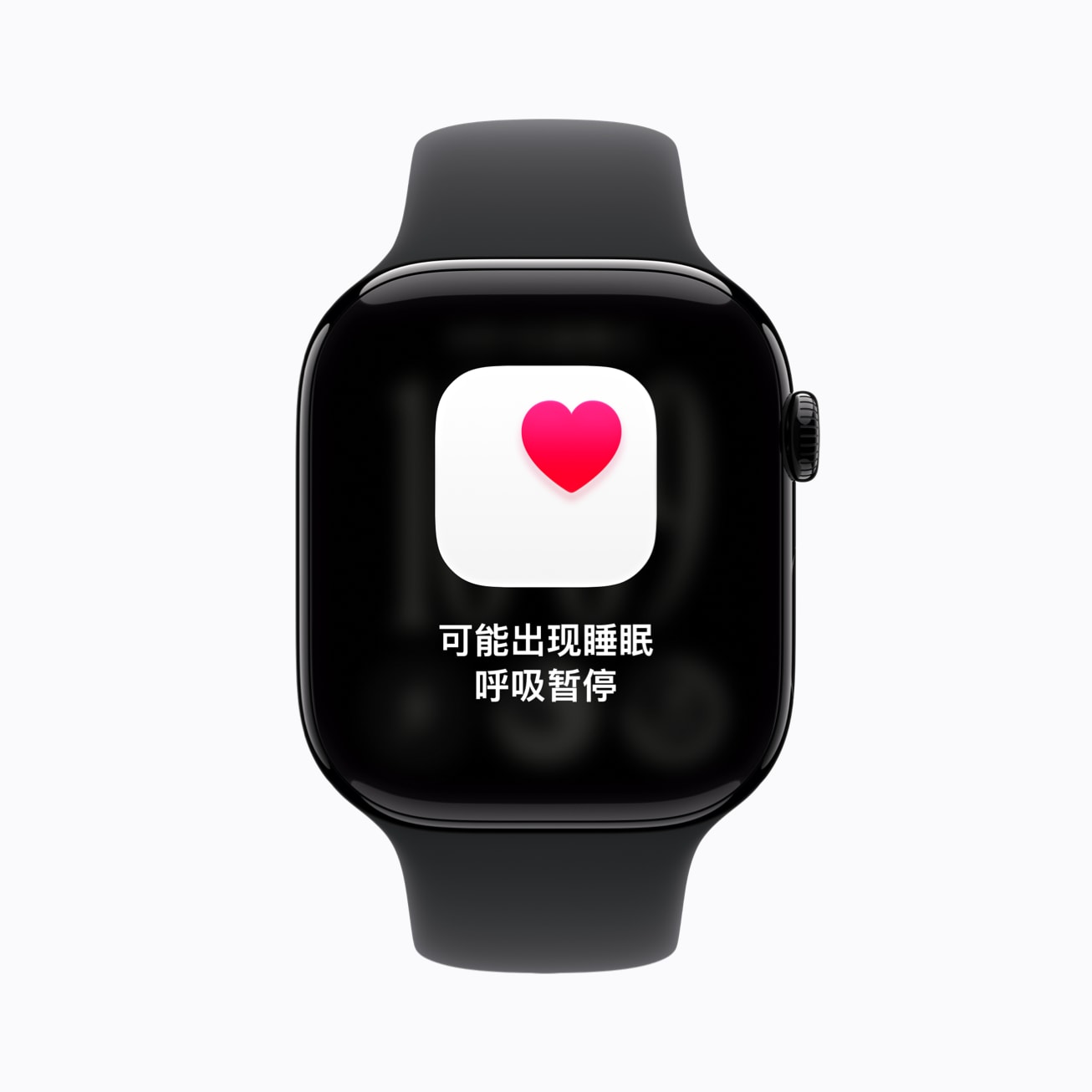
Apple has launched sleep apnea notifications on Apple Watch in China mainland, after its sleep apnea notification software received a medical device registration certificate from China’s National Medical Products Administration (NMPA). Apple said in its China newsroom announcement, published on October 14, 2026, that the feature is available from that date on Apple Watch Series 9 and later, Apple Watch Ultra 2 and later, and Apple Watch SE 3 and later.
The feature looks for signs of moderate to severe sleep apnea and is aimed at adults aged 18 and over who have not been diagnosed with the condition. With China mainland added, Apple says sleep apnea notifications are now available in more than 170 countries and regions.
What Apple announced for China mainland
The announcement was posted only on Apple’s Chinese newsroom, in Chinese. The facts below are our translation of Apple’s text, not direct quotes.
Don’t miss the best of The Mac Observer
Set us as a preferred source and our Apple reporting ranks higher in your Google Search results and Discover feed — one tap, no account changes.
According to Apple, the NMPA registration covers its mobile sleep apnea notification software as a medical device in China.
Apple describes sleep apnea as a potentially serious condition marked by repeated pauses in breathing during sleep. The company estimates that more than 1 billion people worldwide are affected, and says most cases go undiagnosed. Left untreated, Apple notes, sleep apnea can raise the risk of high blood pressure, type 2 diabetes and cardiovascular disease.
How the feature works
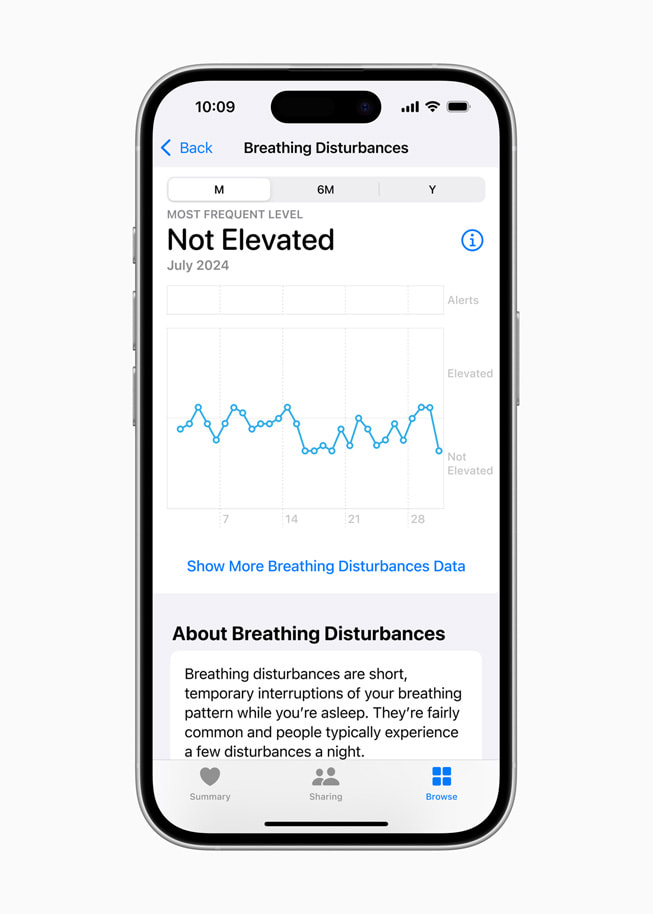
Apple Watch uses its accelerometer to pick up small movements at the wrist that are linked to interruptions in normal breathing. The watch turns those signals into a metric Apple calls Breathing Disturbances.
Occasional, minor disturbances are normal. Apple says the value of the metric comes from tracking it over time, since frequent disturbances across many nights can point to a risk of sleep apnea.
Each night’s Breathing Disturbances reading appears in the Health app on iPhone and iPad, classified as either Elevated or Not Elevated. Users can view the data over one month, six months or one year.
The system analyzes the data every 30 days. If it shows consistent signs of moderate to severe sleep apnea, the user gets a notification so they can talk to a doctor about next steps, including possible diagnosis and treatment.
That notification includes:
- The time period in which sleep apnea may have occurred
- Educational material on why seeking treatment matters
- A PDF with three months of Breathing Disturbances data, the notification details and other information to share with a healthcare provider
Apple says the feature was built using a deep learning algorithm and a large dataset of clinical grade sleep apnea tests, and was validated in a clinical study.
What the clinical study found
Apple links its China announcement to a September 2024 validation paper on the feature. In the validation study, 1499 participants were enrolled and 1448 completed it. Participants wore Apple Watch for up to 30 nights and took at least two nights of home sleep apnea tests as the reference.
| Measure | Result |
|---|---|
| Weighted overall sensitivity | 66.3% |
| Sensitivity for severe sleep apnea | 89.1% |
| Sensitivity for moderate sleep apnea | 43.4% |
| Weighted overall specificity | 98.5% |
| Specificity for people without sleep apnea | 100.0% |
In plain terms, the feature rarely flagged people who did not have sleep apnea, and it caught most severe cases, but it missed more than half of moderate ones. Apple’s support document is direct about this: not all people with sleep apnea receive a notification, and anyone who believes they have the condition should talk to a doctor.
Supported models and requirements
| Requirement | Detail |
|---|---|
| Apple Watch Series | Series 9 and later |
| Apple Watch Ultra | Ultra 2 and later |
| Apple Watch SE | SE 3 and later |
| Age | 18 and over |
| Diagnosis | Not previously diagnosed with sleep apnea |
Apple’s sleep apnea notifications support document adds that the watch and iPhone should run the latest versions of watchOS and iOS, and that Sleep must be set up with Track Sleep with Apple Watch turned on. The watch needs to be worn to sleep for a minimum of 10 nights over a 30 day period.
How to turn it on
Per Apple’s support document, setup happens in the Health app on iPhone:
- Open the Health app and tap the Browse tab, then tap Respiratory
- Under Sleep Apnea Notifications, tap Set Up, then tap Next
- Confirm your date of birth and whether you have ever been diagnosed with sleep apnea, then tap Continue
- Tap Next, then tap Done
To see your data later, go to Browse, then Respiratory, and tap either Sleep Apnea Notifications or Breathing Disturbances. If you receive a notification, you can tap Export PDF to share the report with your doctor.
Apple’s support document also notes that the feature is not intended to diagnose, treat or aid in the management of sleep apnea.
China mainland follows other recent rollouts. We covered the feature’s arrival in India in May. Apple’s full list of supported regions is on its watchOS feature availability page.