
Today Dave Hamilton and John Martellaro join Kelly Guimont to discuss Angela Ahrendts’ departure and the implications of Amazon buying Eero.
privacy
To No One's Surprise, Other Companies Exploit Apple's Enterprise Program
Facebook and Google aren’t the only companies exploiting Apple’s Enterprise program. Another investigation by TechCrunch adds porn and gambling apps to the list.
Department of Homeland Security to Investigate Foreign VPNs
Senators Ron Wyden and Marco Rubio are worried about the possibility of foreign VPNs used to spy on U.S. government employees.
Be Safe on the Internet With This Security Checklist
The Security Checklist is an open source list of resources designed to improve your online privacy and security. Check things off to keep track as you go.
This website provides a beginner’s checklist for staying safe on the internet. This website is the result of a conversation started during a recent episode of the Design Details Podcast and a subsequent tweet by Michael Knepprath.
This is a great website that Kelly Guimont pointed my way. Even if you’re a techie and have a handle on your online privacy, you should check this out too.
Apple Tells Developers to Change or Remove Screen Recording
A hot news item today was the revelation that some apps record your screen to learn what you do within the app. This can be used for testing and troubleshooting. Apple has responded, saying:
In an email, an Apple spokesperson said: Protecting user privacy is paramount in the Apple ecosystem. Our App Store Review Guidelines require that apps request explicit user consent and provide a clear visual indication when recording, logging, or otherwise making a record of user activity.
As I said in my argued, the fact that developers know what you do within the app isn’t a big deal. The issues, as Apple noted, are: 1. Users don’t know this happens, and this isn’t disclosed in privacy policies; and 2. Sometimes sensitive data isn’t properly redacted.
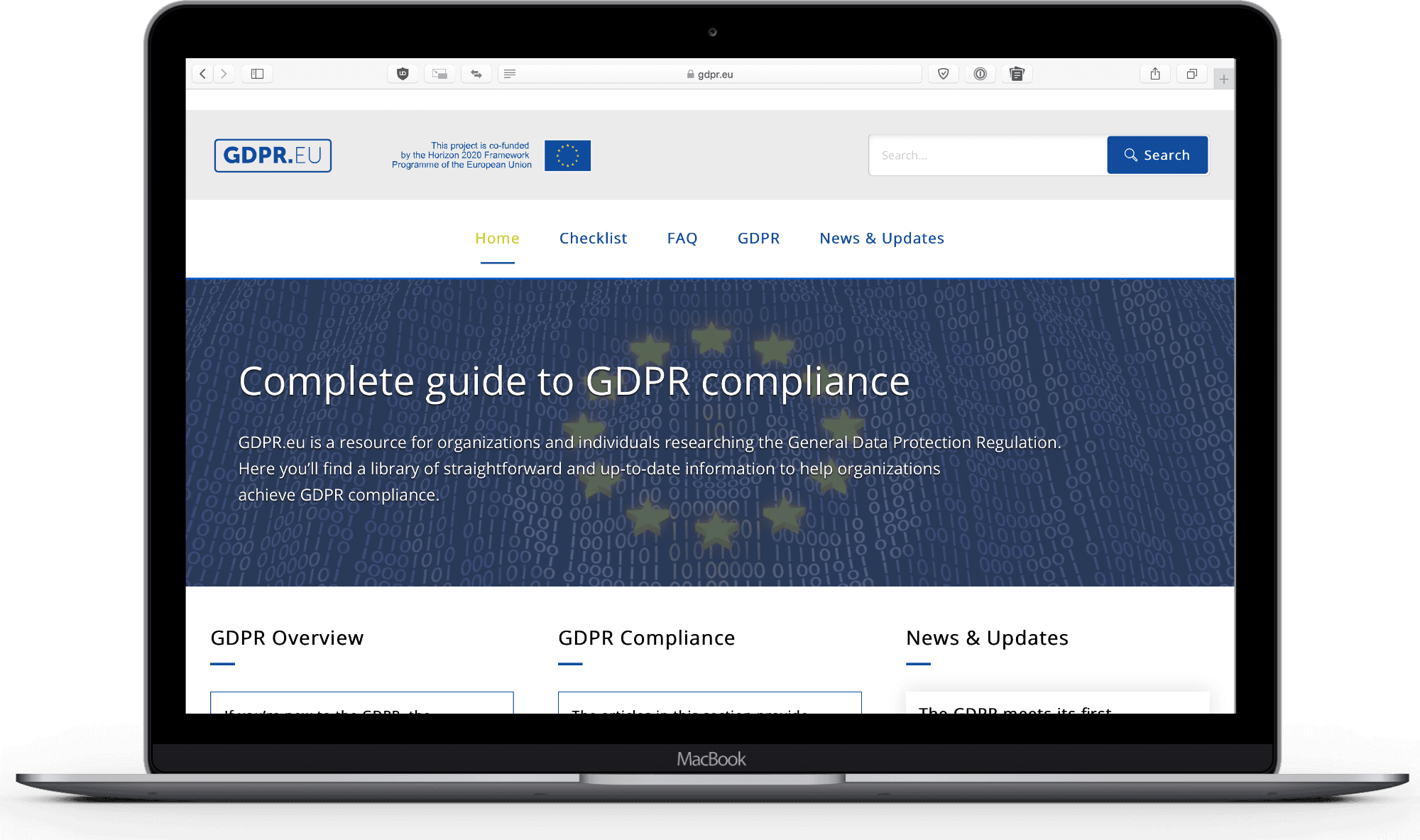
59,000 Reported GDPR Breaches in Just 8 Months
59,000 GDPR beaches have been reported in the 8 months since the law came into force, with the most in The Netherlands, Germany, and the UK.
iOS 12.2 Will Remove 'Do Not Track' Option
In the next update of iOS and macOS Apple will remove the Do Not Track option from Safari. This is okay.
Removed support for the expired Do Not Track standard to prevent potential use as a fingerprinting variable.
Before I see a headline from Forbes titled “iOS 12.2 Has a Nasty Surprise” let me say that removing Do Not Track is good. It never did anything anyway because obeying it was completely voluntary. Which of course means that every website ignored it. And now it can be used to fingerprint your browser. Good riddance.
What Would Happen if You Remove Apple From Your Life?
Kashmir Hill has experimented with cutting out tech giants from her life. In week 5 she found out what it was like to remove Apple.
In addition to abandoning all my iProducts, I am blocking myself from interacting with Apple in any way, using a custom VPN designed for me by technologist Dhruv Mehrotra. The VPN prevents my devices from communicating with the 16,777,216 IP addresses controlled by Apple, rendering iCloud and any Apple apps defunct.
It’s an interesting experiment, especially going so far as to block Apple IP addresses. I look forward to Ms. Hill’s next experiment: Blocking Amazon, Facebook, Apple, Google, and Microsoft all at once.
Siri Privacy and Team Changes – TMO Daily Observations 2019-02-04
Bryan Chaffin and John Martellaro discuss Siri with host Kelly Guimont: Both what Siri should keep to herself and team leadership changes.
This Website Exposes Apple Censorship in China
A new website called AppleCensorship.com exposes how the company censors apps in China at the behest of the government.
A new website exposes the extent to which Apple cooperates with Chinese government internet censorship, blocking access to Western news sources, information about human rights and religious freedoms, and privacy-enhancing apps that would circumvent the country’s pervasive online surveillance regime.
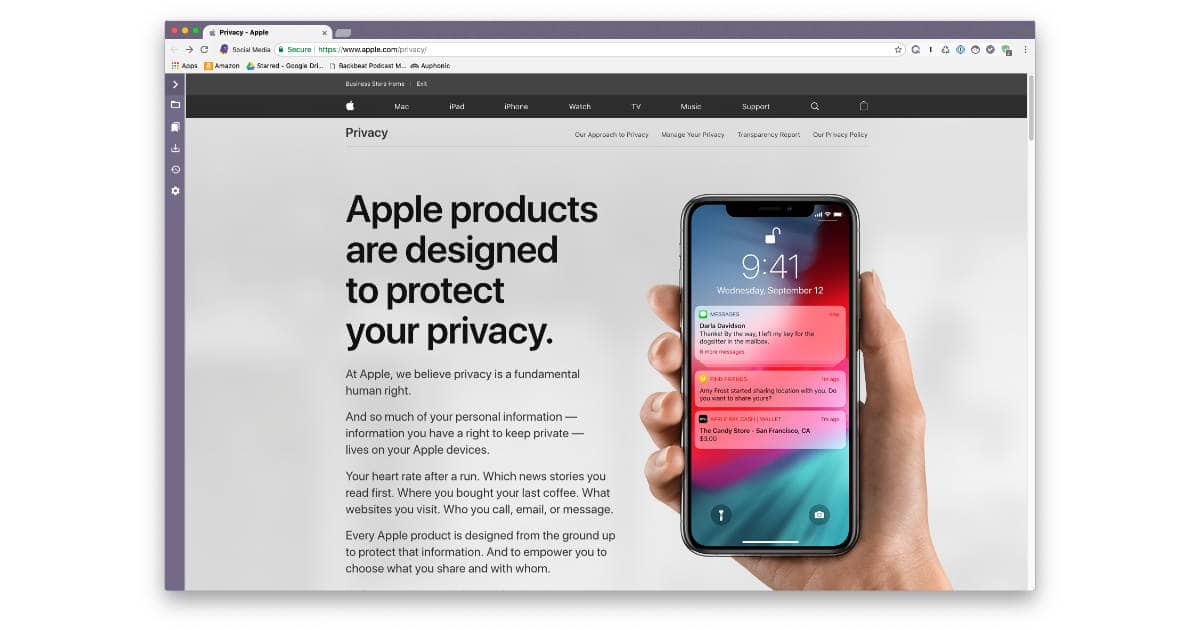
I’m a fan of Apple, privacy, and Apple’s stance on privacy. That being said I think whenever Apple mentions privacy on its website there should be an asterisk with fine print saying: “We believe privacy is a fundamental human right except in these cases.”
New Privacy Feature Coming to iOS 12.2
A new privacy feature will be coming to iOS 12.2 that restricts access to the device’s accelerometer and gyroscope sensors.
Your Health Data is Turned Into a Risk Score and Sold
Yet another reason why we need privacy laws. Companies collect your health data and turn it into a “risk score” which gets sold to doctors, insurers, and hospitals.
Over the past year, powerful companies such as LexisNexis have begun hoovering up the data from insurance claims, digital health records, housing records, and even information about a patient’s friends, family and roommates, without telling the patient they are accessing the information, and creating risk scores for health care providers and insurers.
There is no law against collecting and using this data.
Tech Buying Mistakes, Privacy Updates – TMO Daily Observations 2019-02-01
Andrew Orr and John Martellaro chat with host Kelly Guimont about common tech purchasing mistakes and the latest international privacy news.
This Privacy Bill Could Stop Warrantless Searches of Cloud Data
A privacy bill introduced by Utah lawmaker Rep. Craig Hall could bar warrantless searches of cloud data uploaded to apps and other services.
GCHQ Wants Apple to add it to iMessage, FaceTime Chats
The GCHQ wants Apple to secretly add the agency to iMessage chats and FaceTime calls, effectively creating a backdoor into encryption.
Like Facebook, Google Also Has a Data Collecting App
Although Google is more transparent than Facebook about what how the programs work, it’s still in violation of the App Store.
Apple's Privacy Stance Means it Does Not Get a Pass on FaceTime Security Bug
It was revealed Monday that Group FaceTime has a major bug. It allows a caller to hear the person they are ringing before the recipient has picked up the phone. As Ben Lovejoy points out on 9to5Mac, Apple, and Tim Cook, in particular, have taken a very strong stance on privacy in recent months. The company even put a big privacy advert on the side of a Marriott in Las Vegas during CES. It has received a lot of praise for its approach to privacy. However, that does not mean they cannot be held to account when a security flaw like this is exposed. In fact, arguably we should expect more from a company that puts such importance on privacy.
This particular FaceTime bug occurs only when someone does something completely illogical and unexpected: adds themselves to a call they initiated. I appreciate this would have been a tricky scenario to anticipate and include in testing. But when you are Apple, a company which has talked of little other than privacy over the past few months, then you don’t get a pass on this.
Looking at the VSCO Privacy Policy
Recently Bryan Chaffin challenged Andrew to examine the VSCO privacy policy and translate it from lawyer-speak to human-speak. Here’s what he found.
Microsoft Office on MAS, Privacy Face-Off – TMO Daily Observations 2019-01-25
Host Kelly Guimont chats with Andrew Orr and Bryan Chaffin about Microsoft Office in the Mac App Store and privacy as a business model.
Your Online Profile Consists of Three Layers
Katarzyna Szymielewicz offers a good approach to how you think about your online profile: What you share, what your behavior tells them, and what the machine thinks of you.
Many decisions that affect your life are now dictated by the interpretation of your data profile rather than personal interactions. And it’s not just about advertising banners influencing the brand of the soap you buy—the same mechanics of profiling users and targeting messages apply to political campaigns and visa applications as much as supermarket metrics. When advertising looks like news and news look like entertainment, all types of content are profiled on the basis of your data.
This is a great article, and the most important layer to think about is the data you put online.
Mark Zuckerberg's Op-Ed is Tone Deaf
Mark Zuckerberg has written an op-ed for The Wall Street Journal, and it’s as tone deaf as ever.
Sometimes this means people assume we do things that we don’t do. For example, we don’t sell people’s data, even though it’s often reported that we do. In fact, selling people’s information to advertisers would be counter to our business interests, because it would reduce the unique value of our service to advertisers. We have a strong incentive to protect people’s information from being accessed by anyone else.
Any service that relies on ad money means the advertiser is the customer. I’d love to hear from an advertiser that would refuse access to peoples’ personal information. Facebook may not sell that data directly to advertisers but you can bet it sells access to the data. Two different words that point to the same destination.
If Privacy is a Human Right, Windows 10 is a Crime Against Humanity
Speaking at the World Economic Forum, Microsoft CEO Satya Nadella says privacy is a human right. But Windows 10 is a privacy nightmare.
My own point of view is that it’s a fantastic start in treating privacy as a human right. I hope that in the United States we do something similar, and that the world converges on a common standard.
Arizona Porn Bill Would Force Consumers to Fund Border Wall
A porn bill [PDF] introduced in Arizona called the Human Trafficking and Child Exploitation Prevention Act would require all internet devices sold in Arizona to be installed with a porn blocker.