
Bryan Chaffin and Jeff Gamet talk about the practical realities of listening to music int he age of streaming music services. They also talk about how they use their iPads, and the ways in which that has changed. They cap the show with a practical use case look at NFT graphic novels, which Bryan says is one way of bringing collectibility back to the comic book world.
Apple
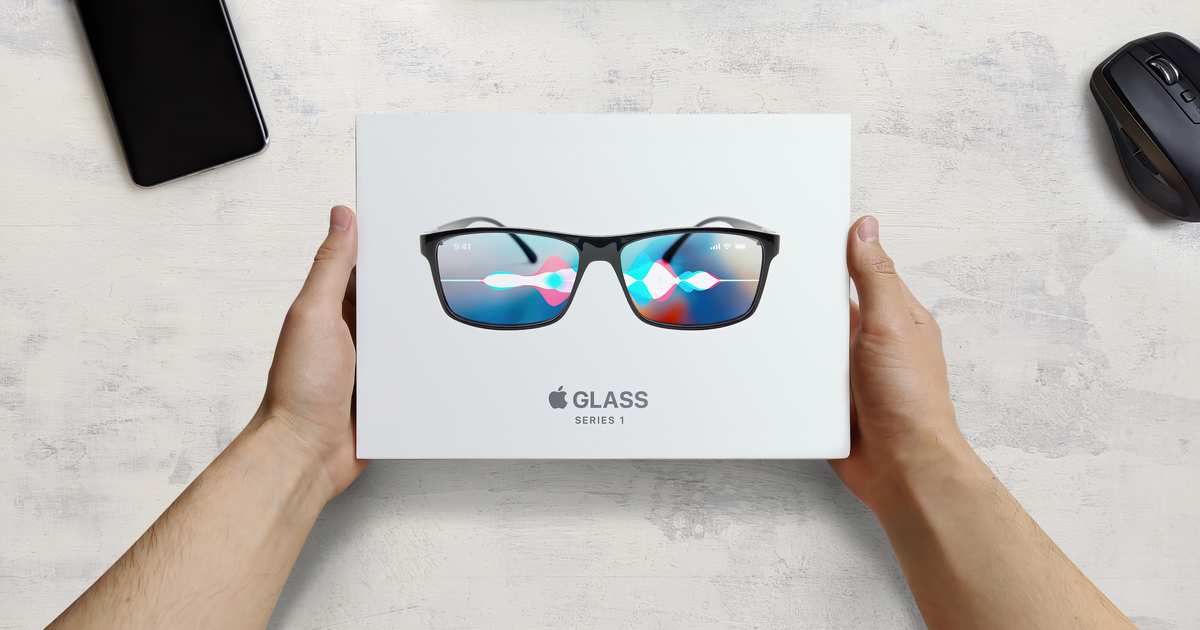
Rumored Hire Hints Apple AR Headset Coming Soon
If the hiring rumor is correct, Meta’s AR communications and PR head will help bring the first Apple AR headset to the public.

Dutch Regulator to Force Apple to Change App Store Policy for Dating Apps
It’s interesting that the focus of this order is on dating apps, when other assaults on Apple’s App Store payment policies approach different genres, or all apps as a whole. The decision comes on the heels of the tech giant agreeing to change its payment policies for “reader” apps and the ongoing Apple v. Epic dispute. It could be one more nail in the coffin of Apple’s monopoly on collecting payment for apps. The Cupertino-based company has, of course, appealed the decision.
Some app providers are dependent on Apple’s App Store, and Apple takes advantage of that dependency. Apple has special responsibilities because of its dominant position. That is why Apple needs to take seriously the interests of app providers too, and set reasonable conditions. That is what we are forcing Apple to do with this order.

Apple Offering Free Two-Hour Delivery 'in Most Metro Areas' Before Christmas
Apple is offering free two-hour delivery on certain items in the run-up to Christmas as well as extended holiday returns.

Budget Issues Could Delay DoJ Probes Into Apple And Google
U.S. Department of Justice (DoJ) probes into Apple and Google could be delayed until spring 2022. Politico reported that the delay is due to ongoing budget issues.
Now the decision on going to court is likely to come in March or later because of continued discussions about where to file and who will make the call, the two people told POLITICO. They spoke anonymously to discuss internal DOJ deliberations. Another major concern for the department is the likely expense of a court battle with the two companies, each of which has a market value exceeding $1 trillion. That issue became more fraught this week when Sen. Joe Manchin (D-W.Va.) torpedoed Democrats’ Build Back Better package, which would have given DOJ a $500 million boost for antitrust enforcement.

Apple Workers Call For Christmas Eve Walkout
Apple workers are planning a Christmas Eve walkout amidst calls for “paid sick time” and “proper mental healthcare.”

SEC allows AAPL Shareholders to Push For Details on Apple NDAs
The SEC has agreed that an AAPL shareholders proposal requiring Apple to explain how it uses tools like NDAs can proceed.

Steve Jobs Returned to Apple 25 Years Ago
This week marks a major landmark in Apple history. It’s 25 years since the company acquired NeXT and Steve Jobs returned. MacRumors has a good reflection on the episode.
“With this merger, the advanced software from NeXT will be married with Apple’s very high-volume hardware platforms and marketing channels to create another breakthrough, leapfrogging existing platforms, and fueling Apple and the industry copy cats for the next ten years and beyond,” said Jobs. “I still have very deep feelings for Apple, and it gives me great joy to play a role in architecting Apple’s future.” Jobs initially returned to Apple as an advisor, making his first appearance at Macworld San Francisco in January 1997 to announce details of how Apple planned to incorporate NeXT technology into future releases of Mac OS. Jobs went on to replace Amelio as the company’s interim CEO just nine months later, and he ended up dropping the interim title and remaining CEO until stepping down in August 2011 due to health issues.

AAPL Shareholders Call For Civil-Rights Audit of Apple
Apple shareholders have called for a civil-rights audit of the company amid controversy and slow progress in improving workforce diversity
Universal Control, App Privacy, and ArtSabers, with Jeff Gamet - ACM 564
Bryan Chaffin and Jeff Gamet geek out over ArtSabers and UltraSabers, two companies making light sabers! They also talk about Universal Control and how they would use it when Apple gets around to releasing it. And they look at the ever-changing world of app privacy.
Apple Building New Team in Irvine, California, to Build Wireless Chips
Apple is hiring engineers to work in a new office in Irvine, California and develop wireless chips in-house.

Apple Company 'Claris' Completes SOC 2 Type II and ISO Credentials
Claris completed its SOC 2 Type II audit and ISO credentials for FileMaker Cloud and its automation platform, Claris Connect.

Apple Delays Return to Office Indefinitely
Apple has delayed its return to the office once again until a “date yet to be determined” due to the onset of the Omicron Covid-19 variant.

Department of Labour to Investigate Allegations Apple Retailiated Against Whistleblower Ashley Gjovik
The U.S. Department of Labor is set to investigate allegations that Apple retaliated against whistleblower Ashley Gjovik.

Apple's Jeremy Butcher talks Apple Business Essentials – Mac Geek Gab 905
Apple recently announced-and-released the beta of their new MDM solution, Apple Business Essentials. Today we have Jeremy Butcher, Enterprise and Education Product Marketing Manager at Apple here to help us answer our questions about exactly what Apple Business Essentials can do for us and how it all works in a real-world setting. Press play and enjoy learning five new things about Apple Business Essentials!

Poland Probes Apple's App Tracking Transparency Privacy Feature
Poland’s Office of Competition and Consumer Protection (UOKiK) is investigating Apple over its private feature App Tracking Transparency (ATT).
Smarthome Tech Matter(s), Crypto in a Down Market, with Jeff Gamet - ACM 563
Bryan Chaffin and Jeff Gamet dig into Matter, the smarthome platform that should make it easier for devices to work all the major smarthome platforms. They also talk about cryptocurrencies in a down market, and how and why Bryan is interested only in long-term prospects and possibilities.

Microsoft Tried Compromising with Apple to Bring Game Pass to App Store
In an effort to bring Xbox Game Pass to the iOS App Store, Microsoft tried compromising with Apple. Apple reportedly refused to budge.

Apple Store in Southlake, Texas Closes Amidst Following Covid Outbreak
An Apple Store in Southlake, Texas has temporarily closed its doors following a Covid outbreak amongst the staff.

Apple's US$275 Billion China Deal Faces Criticism
Details of Tim Cook’s personal interventions with officials in China and a US$275 billion deal signed in order to do business there have been revealed.

Does Apple Have Too Much Control Over Your iPhone?
Recode is working on a series that examines Big Tech and antitrust. Sara Morrison covers Apple in the first installment, asking “How much control should Apple have over your iPhone?” One paragraph in particular grabbed my attention:
In her book Monopolies Suck, antitrust expert Sally Hubbard described Apple as a “warm and fuzzy monopolist” when compared to Facebook, Google, and Amazon, the other three companies in the so-called Big Four that have been accused of being too big. It doesn’t quite have the negative public perception that its three peers have, and the effects of its exclusive control over mobile apps on its consumers aren’t as obvious.

iOS 15.2 Lets Users View iPhone Parts and Service History
As of iOS 15.2, consumers will be able to view their iPhone parts and service history straight in the Settings app.

Morgan Stanley Sets US$200 Target Price For AAPL - Cites Apple Car, AR/VR
Morgan Stanley has set AAPL a US$200 price target. In a note seen by AppleInsider, the bank cited Apple’s expected moves into cars and AR/VR as the reasons for this price hike.
Lead analyst Katy Huberty said that the bank is cautious on IT hardware heading into 2022 but noted that Apple should benefit from “a light to quality,” driven by new products being priced-in, as well as the iPhone and App Store Huberty points out that Apple shares don’t appear to bake-in the impact of new products. She points out that Apple is developing products aimed at both the AR/VR and self-driving car markets, and the new price target reflects that. “Today, we know that Apple is working on products to address two significantly large markets – AR/VR and Autonomous Vehicles – and as we get closer to these products becoming a reality, we believe valuation would need to reflect the optionality of these future opportunities,” she wrote.

iPhone 13 And Apple Watch Carrier Rebate Wrangles
A significant number of customers have reportedly found it difficult to get an expected rebate back from carriers on various products, including the iPhone 13 and Apple Watch. One of those was Bloomberg News’s Mark Gurman. In his latest Power On newsletter, he described the issue and the various ways some people had resolved it., which is likely to be useful to others.
My struggles with the rebates process started with the Apple Watch. I had purchased the Apple Watch Series 7, which came out in October, and submitted a request to T-Mobile for its $100 rebate. Several weeks after my submission, to my surprise, T-Mobile’s promotion website said that my claim was denied because the product wasn’t activated during the promotion window. This, of course, was false. Multiple hourlong phone calls with T-Mobile customer service didn’t resolve the situation, nor did messages sent to the company’s support team over Twitter. Ultimately, the issue was only fixed after talking to T-Mobile at the corporate level. We figured out that my rebate was denied because the fine print of the deal—depending on how you read it—requires the opening of an entirely new phone number.